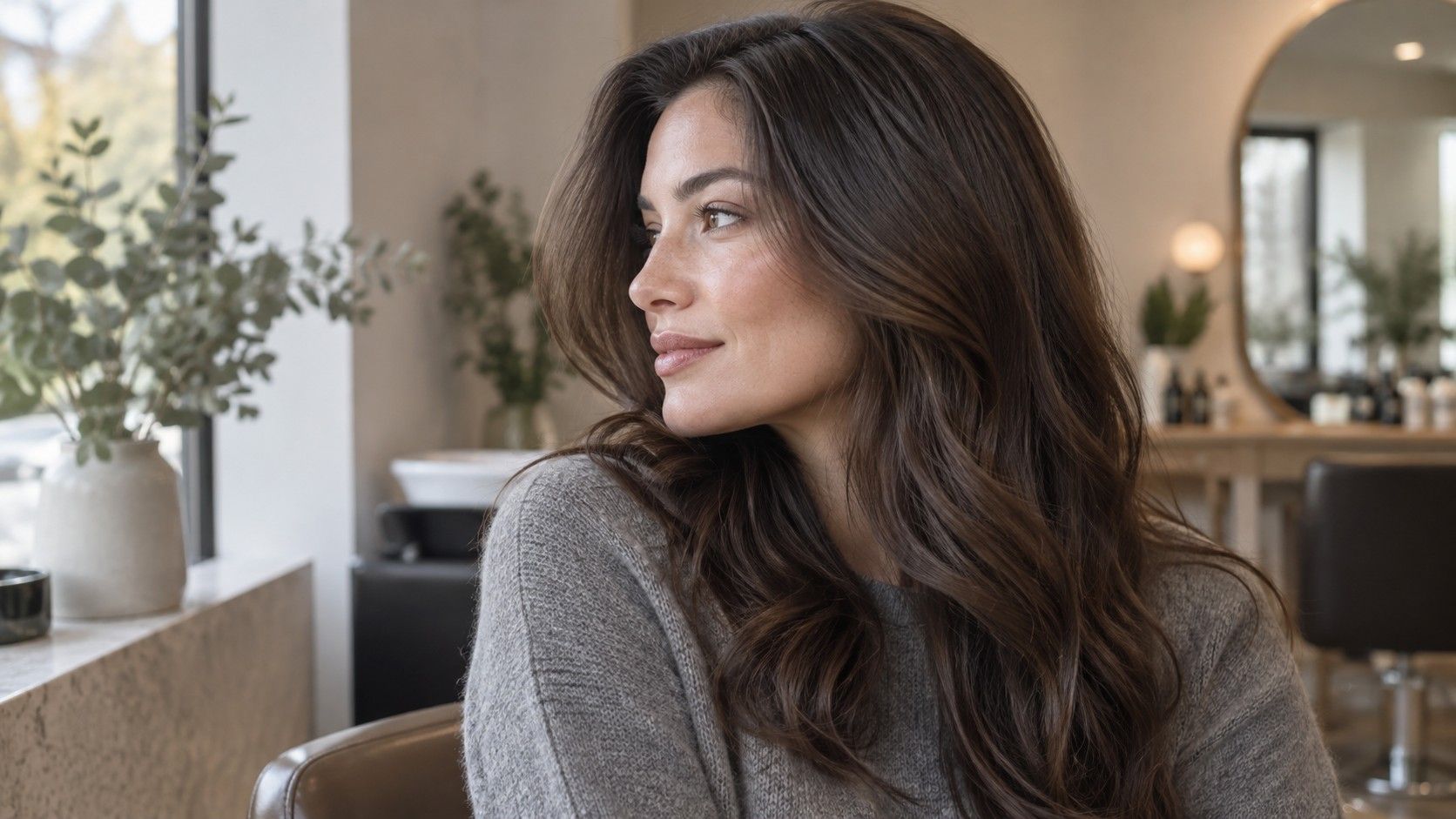
A photograph labeled “cool brunette” can show anything from a soft medium brown to a shade that looks nearly black. Those choices create very different frames around the face, even when both are described as cool. Before choosing among cool winter hair colors, separate the depth you want from the tone you like. Clothing comparisons, carefully chosen reference photographs and a realistic discussion of roots can make that decision clearer. A Winter palette can guide the visual request, but it cannot prescribe a formula or guarantee the finished result.
Compare familiar clothes beside the hair you have now
Begin with your current appearance in indirect daylight. Wear a simple top and look at your hair close to the face, including the roots, the ends and any lighter sections. Hair can contain several visible colors at once, so “my hair is brown” may hide the very difference you are trying to evaluate. Describe what you see without deciding immediately that it needs changing.
Hold a cool gray fabric, soft navy and a clearer cool red near the neckline. Use comparable amounts of each and keep the light steady. These familiar Winter leaning clothing directions let you observe how your current hair works with colors you hope to wear. They do not confirm a season. Notice whether you like the overall balance and whether the outfit requires extra adjustments to feel comfortable.
Briefly pull the hair away from the face or cover its length with a neutral cloth. Compare the same tops again. If your preference changes considerably, the current hair color is influencing the clothing comparison. That is useful context for a consultation, especially when the hair is dyed. It does not prove that the covered result reveals a single “true” palette.
Keep makeup consistent through the comparisons. A stronger brow or darker lip can make a deep hair frame feel more balanced, but it also changes the question. First judge the ordinary amount of makeup you actually wear. A hair color that appeals only with a more elaborate daily routine may still be a choice, though it deserves to be a conscious one.
Separate a darker frame from a cooler brown
Depth means how light or dark the hair appears. Tone describes its visible color direction, such as golden, reddish, neutral or ashy. Darkening a warm brown and cooling a medium brown are different visual changes. Combining both can produce a much stronger transformation than the reference phrase “slightly cooler brunette” suggests.
To explore depth, compare references that stay in a similar tone family: medium neutral brown, deep neutral brown and near black neutral brown. To explore tone, compare neutral, visibly golden and visibly ashy browns at roughly the same depth. Screen images remain approximate, but organizing them this way prevents every saved photograph from asking for a different change.
A dark scarf or hairpiece held around the face can suggest the amount of dark framing you enjoy. It cannot predict how dyed hair will reflect light or look in motion. Use it for the narrow question of visual weight. Does a near black frame feel appealing in daylight, or would a somewhat lighter brunette leave you more room with soft clothing and minimal makeup?
A Winter label does not require black hair. Nor does it establish that the coolest possible ash tone will look best. Different seasonal systems define Winter subgroups differently, and individual preferences vary within them. Select a depth that supports the appearance you want, then refine tone with references rather than moving automatically toward the darkest option.
Read ash brunette photographs with a skeptical eye
A cool salon photograph may owe part of its appearance to lighting and editing. A blue cast in the background, skin and white shirt is a clue that the whole image has shifted cooler. Look for a second image of the same color in neutral daylight if one is available. A single polished photograph cannot show how the shade behaves in every setting.
Compare straight and curled examples. Curves catch light and reveal lighter sections, while a smooth dark surface can appear more uniform. Long hair with bright ends also places different colors near the face than a short cut. When choosing a reference, prioritize the framing area and overall distribution of depth, rather than expecting the hairstyle to disappear from the comparison.
| Reference feature | What it can help communicate | What it cannot establish |
|---|---|---|
| Medium ash brunette in daylight | A softer, cooler visual direction | The exact result on your existing hair |
| Deep neutral brunette | The amount of dark framing you prefer | A universal Winter hair requirement |
| Near black hair with pale highlights | A strong contrast pattern | Whether you will like the same contrast at your hairline |
| A photograph of your own roots and lengths | Your starting appearance and visible variation | The process or formula needed to change it |
Save two or three references with a sentence explaining each one. “Like the medium depth, dislike the gray cast” is a useful note. So is “want this darker framing, without the very light ends.” A folder of twenty attractive brunettes with no explanation leaves the colorist to guess which feature attracted you.
Include one example you do not want, described respectfully and precisely. Perhaps it is too dark, too red looking or too strongly highlighted for your taste. That negative reference often clarifies the boundary better than another nearly identical favorite. Keep the discussion about your intended appearance rather than treating someone else's hair as an error.
Account for roots, gray and the amount of contrast you want
Look at the contrast between your roots and the proposed overall depth. A very dark length beside lighter or gray regrowth can produce a visible boundary as the hair grows. Whether you enjoy that appearance is a style preference. Consider it before selecting a photograph that shows freshly finished color with no regrowth visible.
Gray hair can also form part of the intended palette. A mixture of darker strands and silver may create depth and coolness without a uniform dark surface. Covering, blending or displaying that variation are different visual goals. A seasonal label does not require you to choose any one of them. Bring a current daylight photograph so the discussion starts with your actual distribution.
Decide how often you are willing to book appointments and what ongoing cost feels reasonable. Ask a colorist how the proposed appearance is expected to change between visits, what appointments the plan involves and what alternatives fit a lower maintenance routine. The answer depends on your starting hair and desired change; a palette chart cannot supply a dependable timetable.
Think about face framing placement as well as the overall shade. A lighter section beginning directly at the hairline creates a different contrast pattern from lighter pieces kept farther back. If you like a dark frame, say so explicitly. If a solid dark shape feels heavy, show an example with softer variation near the face. These are useful design choices without requiring technical color instructions.
Bring clear references that a colorist can assess
Describe your starting point, your preferred depth and the tone you want to avoid. A clear request might be: “I like a medium to deep brunette frame, prefer a neutral to cool appearance in daylight, and do not want the result to look almost black.” That gives the conversation concrete boundaries. A request for “Winter hair” alone leaves too much room for interpretation.
Bring your reference images on the same device and, if practical, wear a top from your regular wardrobe. A navy sweater or cool gray shirt can make the desired relationship between clothes and hair easier to discuss. Mention whether the photographs were taken in daylight and whether the current lengths have previous color. Let the colorist assess what is achievable and how the starting point affects the options.
Ask to see a physical shade reference near your face where possible, while remembering that a swatch is a visual aid rather than a promise. Discuss depth and tone separately: first whether the proposed shade is darker than you want, then whether its color direction fits your references. This order helps prevent a pleasing cool tone from distracting you from an unwanted jump in darkness.
Leave the consultation with an agreed visual goal and a clear account of the likely upkeep before deciding. If your best evidence supports a modest change, there is no need to make a dramatic one to match a seasonal category. The useful outcome is a hair frame you enjoy with ordinary clothes, in ordinary light, through the interval between appointments.